Trapping Aberdeen
July 14, 2026
Uncovering the Origins of Virginia’s Whimbrels
July 14, 2026By: Bryan Watts
7/7/2026
The current outbreak of highly pathogenic avian influenza (HPAI) is the largest panzootic in recorded history. The outbreak has impacted millions of wild and domestic birds worldwide. Waterbirds including waterfowl, seabirds and shorebirds represent natural reservoirs for the virus and have facilitated its spread throughout all major flyways. The virus has now spread throughout all continents and has been detected in several hundred species of wild birds. Of particular concern is the potential impact that HPAI may have on threatened or recovering species.
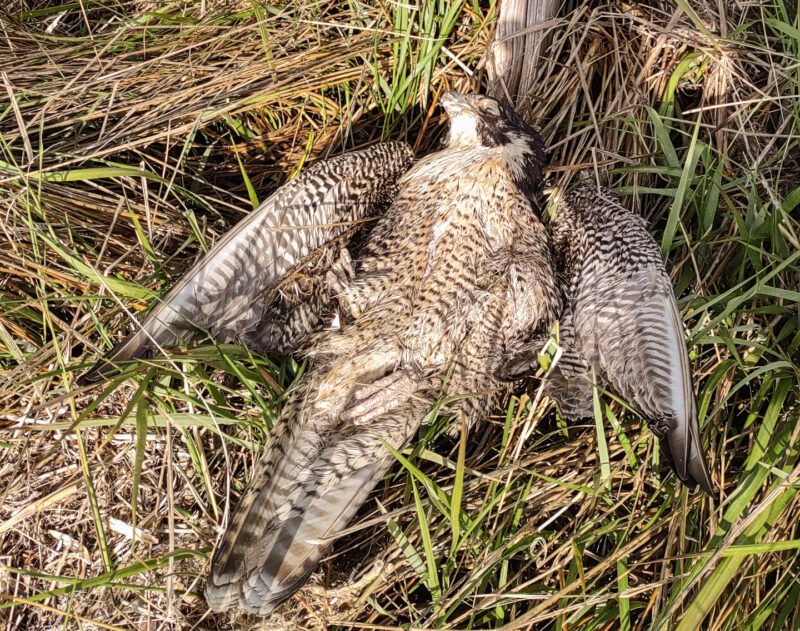
Female peregrine found dead under nesting tower along the Delmarva Peninsula. This is the third adult female lost in this territory over the past two years. No pair occupied the territory during the breeding season of 2026. Photo by Bryan Watts.
On a global scale, populations of peregrine falcons were severely impacted by contaminant exposure from the 1940s through the 1960s. After more than 50 years of conservation efforts, many populations have recovered or are recovering. Because peregrine falcons feed exclusively on other wild birds, they have high exposure to HPAI. Peregrines that nest or winter along the outer coast or in areas where waterbirds congregate and represent their major prey may have particularly high exposure to the virus.
The Center for Conservation Biology, in collaboration with the New Jersey Division of Fish and Wildlife, recently published a paper entitled “The influence of diet-mediated exposure of avian influenza on adult survival, recruitment and territory occupancy in peregrine falcons.” The paper compares adult survival and territory occupancy between breeding areas on the outer coast where peregrines rely on shorebirds to raise broods, to those in inland areas that primarily depend on passerines. Following the arrival of HPAI in the region, peregrines on the outer coast have experienced higher adult mortality and lower territory occupancy when compared to inland pairs.
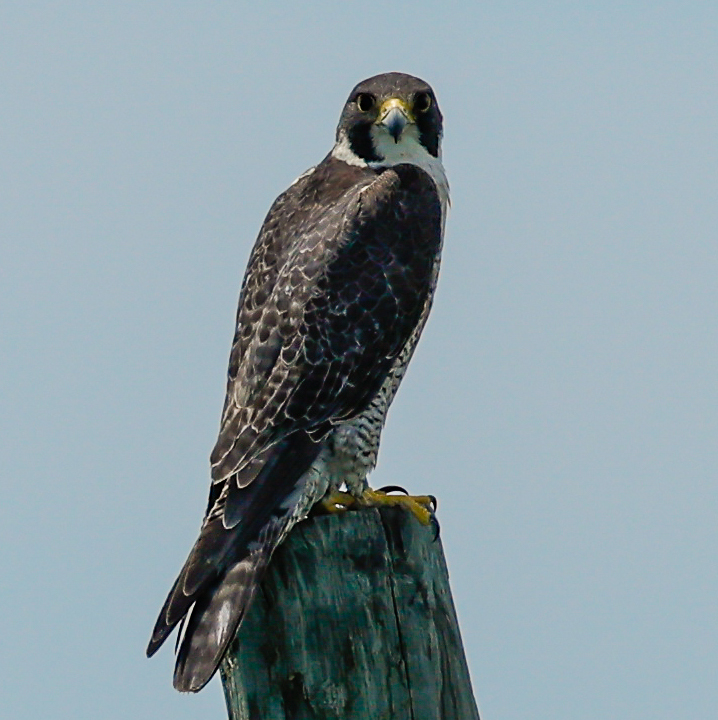
Three-year old female peregrine that colonized the Godwin Tower on the Eastern Shore of Virginia during the 2026 breeding season. She was hatched on the Gull Marsh tower only 11 miles to the north in 2023. Photo by Bryan Watts.
The impact of HPAI on coastal peregrines continued during the spring of 2026. For example, along the Delmarva Peninsula the population dropped to six breeding pairs from a high of twelve just a few years ago. HPAI has set back recovery efforts for peregrines about 20 years in this part of Virginia.
We are left to hope that coastal peregrines will develop immunity to the virus and recover the ground they have lost. There is some reason to be hopeful. Two of the territories along the Delmarva in 2025 were recolonized by young females in 2026. One produced a two-chick brood and the other produced a four-chick brood.
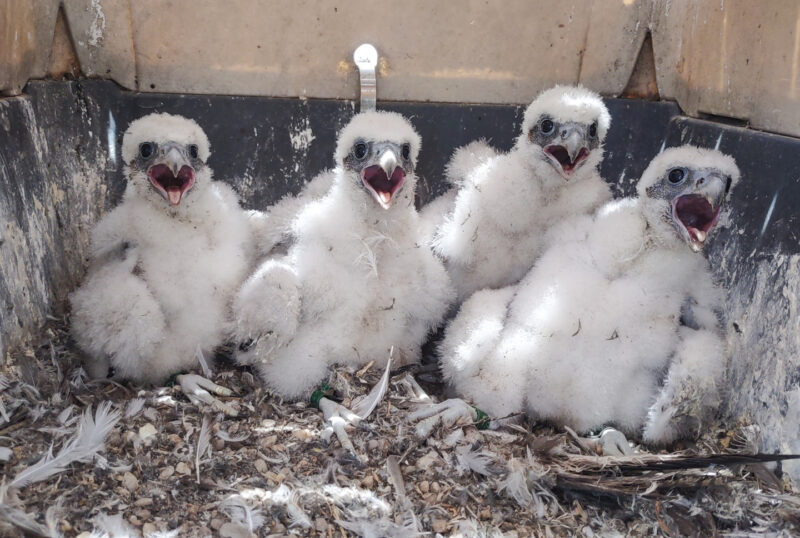
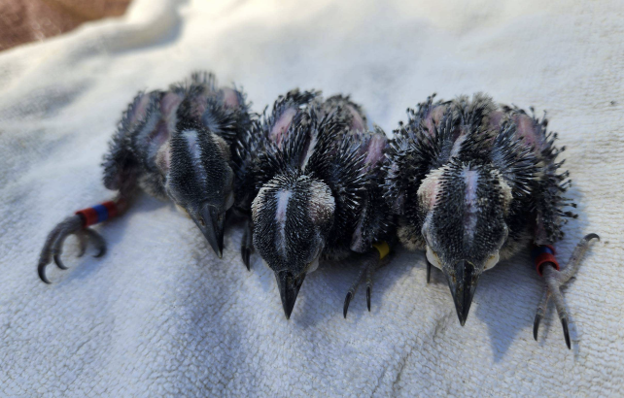
Four-chick brood produced by the young female that colonized the Godwin Tower territory in 2026. Photo by Bryan Watts.