The Egret Wars
April 17, 2026
The Long Life of a Piney Grove Legend
April 17, 2026By: Chance Hines
4/8/2026
Over the past couple years, CCB staff have captured 37 black-throated green warblers at the Great Dismal Swamp National Wildlife Refuge. A tiny data logger was attached to ten of those individuals’ backs. Once retrieved, the data inside tags we deployed can be used to answer an important question: Where do these birds go when they leave the swamp?
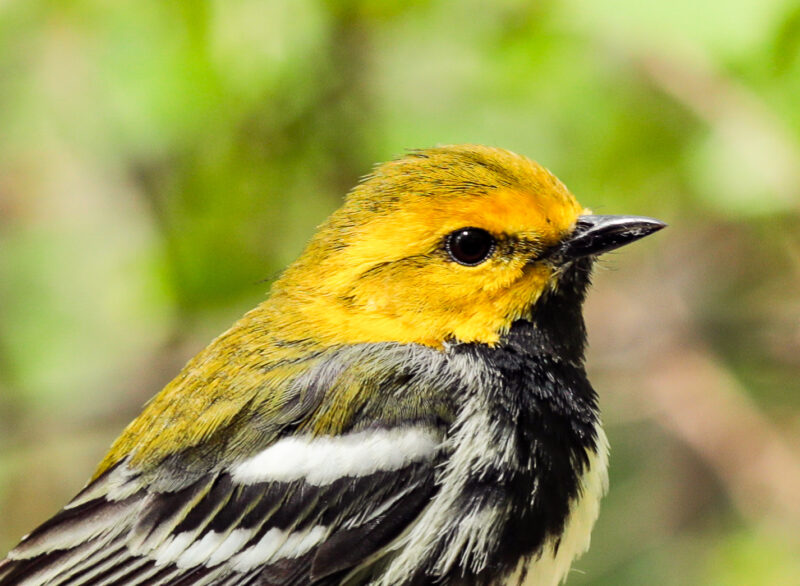
A Wayne’s warbler captured at Great Dismal Swamp National Wildlife Refuge. Photo by Bryan Watts.
The black-throated green warblers we are chasing are known as Wayne’ warblers. They are named after the naturalist Arthur Wayne, who first described their nests in the early 20th century. Waynes’s warblers are found in and near a handful of swamps along the mid-Atlantic coastal plain and the most recent genetic evidence suggests that they are a distinct subspecies of the broader black-throated green warbler.
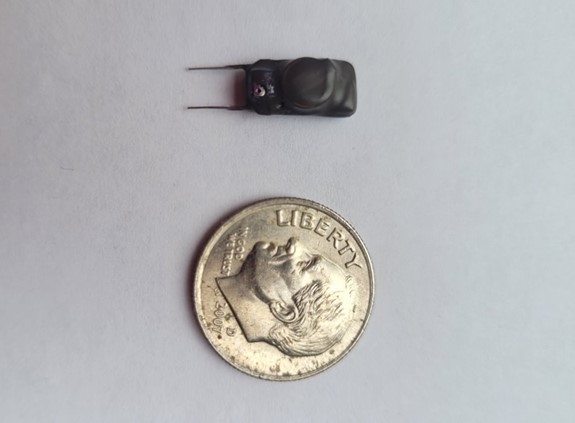
Pressure sensing data logger with a dime for size comparison. These loggers record pressure, which can be used to approximate their location. Data is stored in the tag so must be recovered to retrieve information. Photo by Chance Hines.
While we don’t have firm estimates of historical or current population, they were undoubtedly more abundant when their preferred habitat, large tracts of mature forests adjacent to swamps, was also more abundant. Most of this habitat was lost following the arrival of European colonists. However, there are a few large tracts of mature forest that either escaped the sawmill or have regrown since being deforested. These are largely protected by state and federal government and at least some of these support dense populations of Wayne’s warblers.
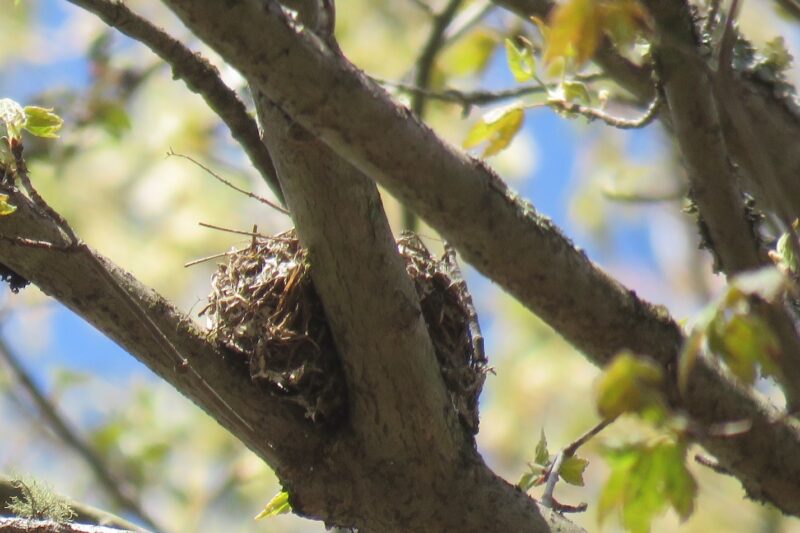
A nest found during the 2026 trapping expedition, likely from previous year, in a Wayne’s warbler’s territory. Photo by Chance Hines.
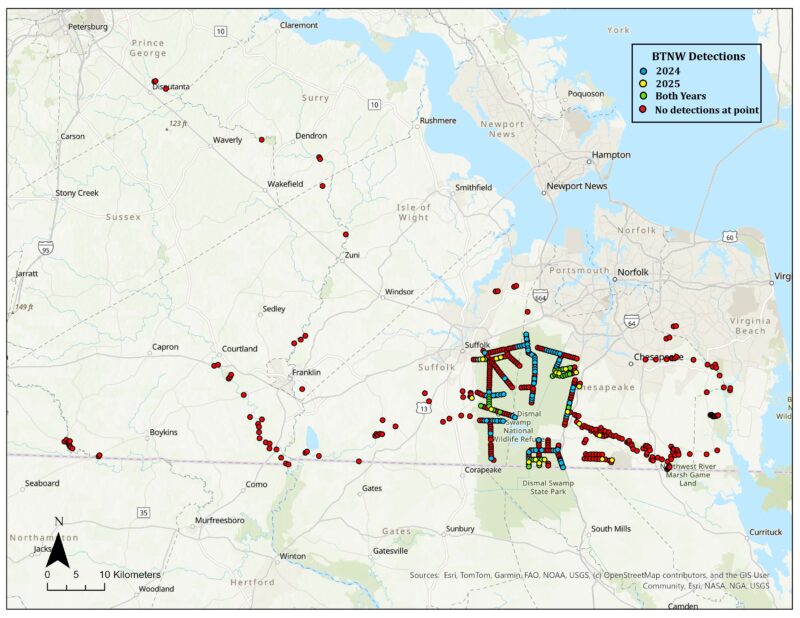
Locations where CCB conducted Waynes’s warbler surveys during the 2024 and 2025 breeding season. We only observed Wayne’s warblers within 10 km of the Great Dismal Swamp. CCB map.
In Virginia, you can find them almost exclusively at the Great Dismal Swamp National Wildlife Refuge. The areas with the oldest forest typically support the highest densities within the refuge and it is also where we have deployed the majority of our tags. The first birds only arrived on territory a week or two ago, but we count a couple dozen along the two and a half miles of trails traveled. It’s not until that last half mile that we finally spot a banded bird. After capturing the bird, within 50 m of last year’s capture location, we find it did not support a tag.
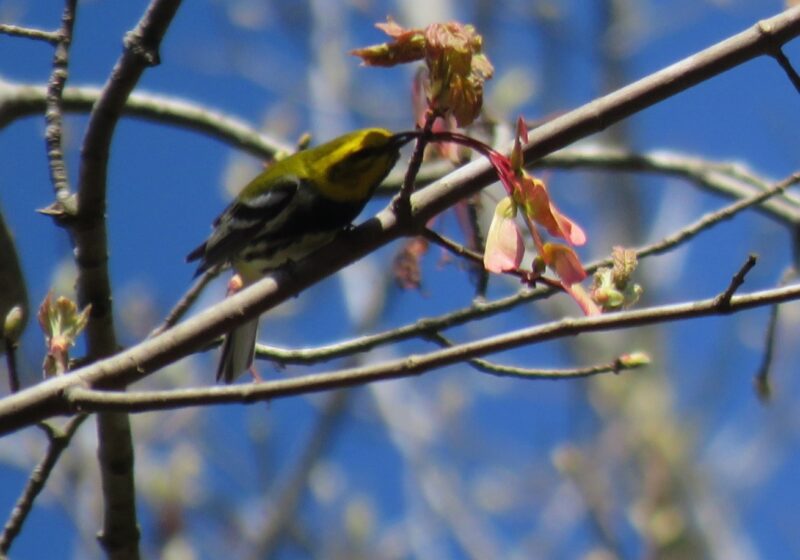
A Wayne’s warbler foraging in a red maple. We have observed these birds foraging on maple flowers and arthropods hidden amongst the flowers. Later in the season they seem to forage more frequently on geometrid moth larvae in oak trees. Photo by Chance Hines.
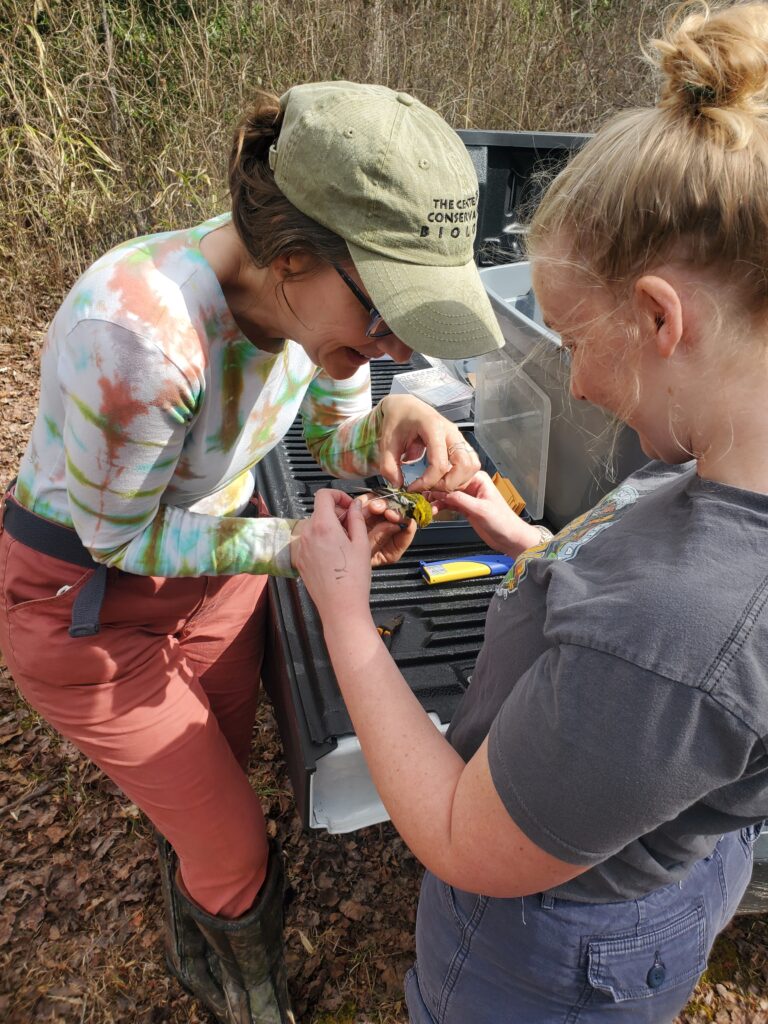
Laura Duval and Kate Jackson fitting a datalogger tag on a Wayne’s warbler during the 2025 breeding season. Photo by Chance Hines.
Birds will continue arriving over the coming weeks, some of which may carry the tags we deployed over the last couple of years. Territories can shift in response to changes in resource abundance or the arrival of competing males potentially bringing different males closer to trails where habitat is accessible. Hopefully work over the next couple weeks will offer a clue to these birds’ nonbreeding patterns.