Chasing Wayne’s Warblers Through the Great Dismal Swamp
April 17, 2026
Trapping Aberdeen
July 14, 2026By: Chance Hines
4/8/2026
As the yellow dust of spring replaces the icy winter mornings, CCB begins the annual spring red-cockaded woodpecker census. The census is meant to provide an estimate of the number of adults that the northernmost population boasts going into the breeding season as well as an opportunity to observe the pre-breeding behavior of the birds and learn which birds are vying to be a breeders. To make sense of what we record during the census, it helps to understand how these birds live.
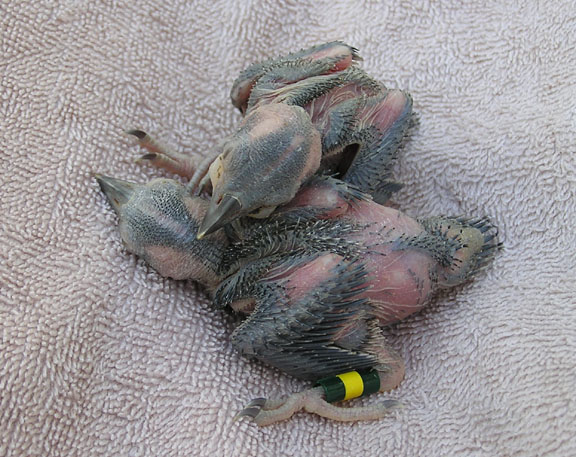
Two nestlings banded at Cluster 1 in 2006. DG/YE/DG:WH/AL (bottom bird), was approximately nine days old at this point. Photograph by Bryan Watts.
Red-cockaded woodpeckers live in social groups that typically include a male and a female breeder as well as other birds that help feed nestlings and fledglings. Most breeding pairs remain the same year to year, but sometimes breeders succumb to winter weather or predation between breeding seasons. Other times, established breeders are challenged by younger birds attempting to claim a breeding position. These contests can be intense, with remarkable acrobatic flights through the treetop canopies. Series of these chases can sometimes last hours, and most often result in the established breeder remaining in the cluster while the younger bird is forced out to seek an existence elsewhere.
The first breeding group to be surveyed this April is Cluster One, one of the original woodpecker groups present on the property before TNC started intensive habitat management. And we are looking for one bird in particular, DG/YE/DG:WH/AL. That is because this bird is the oldest documented woodpecker in North America (and possibly the world) as of its last sighting during December 2025. Whether DG/YE/DG:WH/AL is still out there and maintaining cavity trees at his natal cluster is the question that hangs in the morning air.
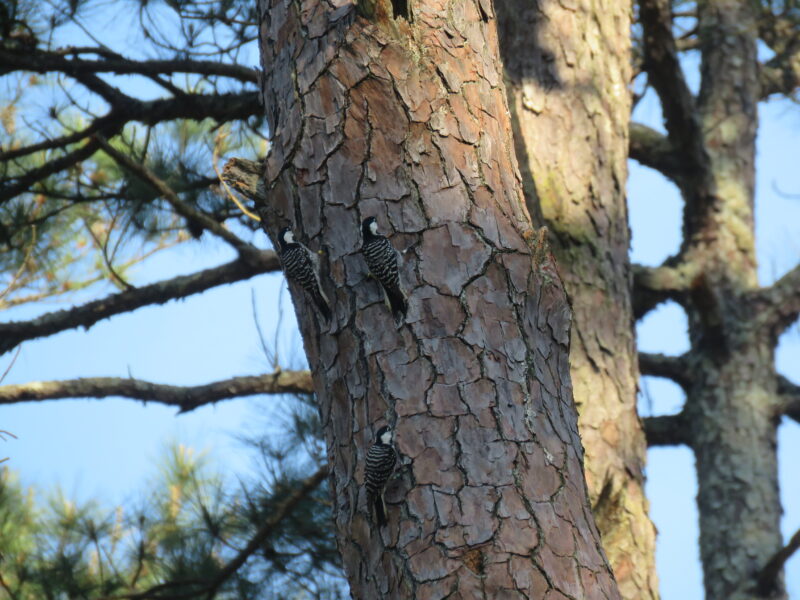
Three red-cockaded woodpeckers, including DG/YE/DG:WH/AL, foraging on a pine tree at Cluster 1 in 2019. Amng these three are the breeding male and female as well as another male that helps raise the young produced in the group. Photograph by Chance Hines.
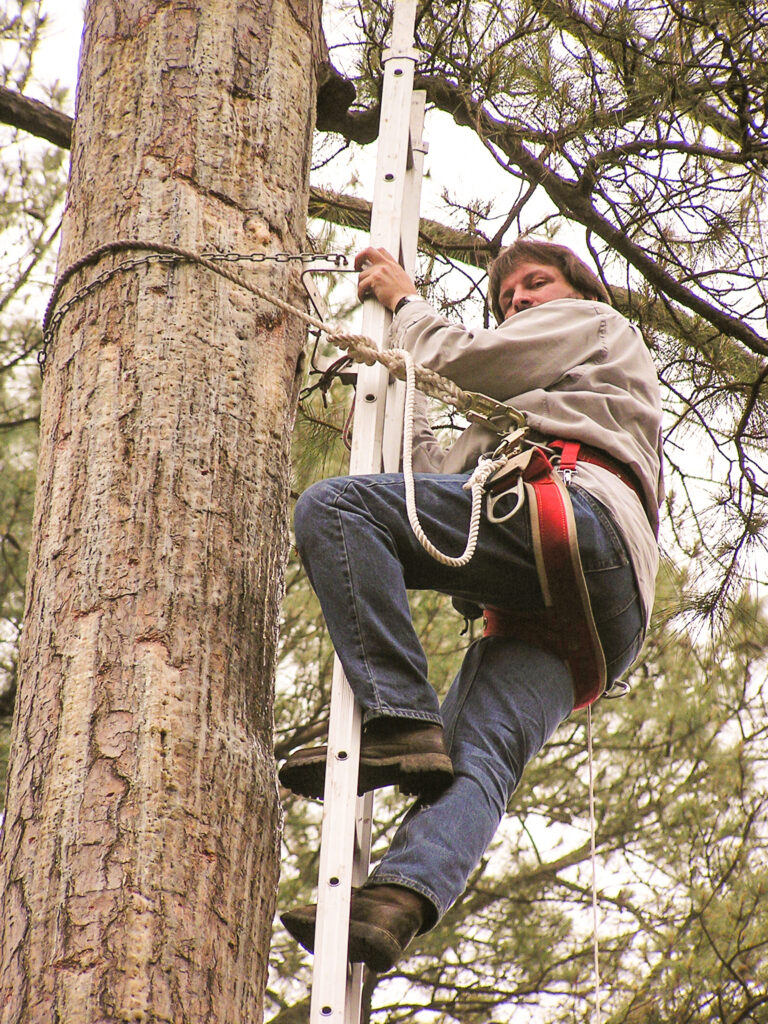
CCB Director Bryan Watts climbs the nest cavity tree at Cluster 1 in 2006. Woodpecker nestlings are banded when they are 5-10 days old so that biologists can track them throughout their lives. Photograph by Marian Watts.
A lot of changes have occurred since this bird hatched during the 2006 breeding season. The population has grown from 30 individuals and six breeding clusters during DG/YE/DG:WH/AL’s hatching year to 150 individuals and 22 breeding clusters during the most recent breeding season. However, these changes may have gone unnoticed by DG/YE/DG:WH/AL, as he was unusually site-faithful throughout his tenure. He was recorded at Cluster One and only at Cluster One during every single winter and spring census since fledging. Even before he attained breeding male status in 2012, he was observed assisting the breeding pair with incubation and, during the 2011 breeding season, CCB staff noted his aggressive demeanor when defending the nest against other red-cockaded woodpeckers.
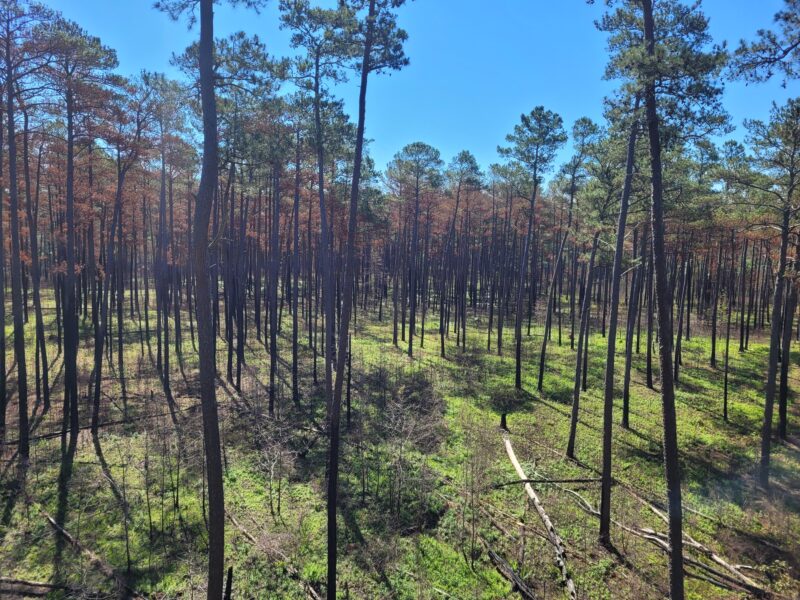
A view of regenerating vegetation following a prescribed fire at Piney Grove Preserve. Fire maintains the habitat that red-cockaded woodpecker need to persist. Photograph by Chance Hines.
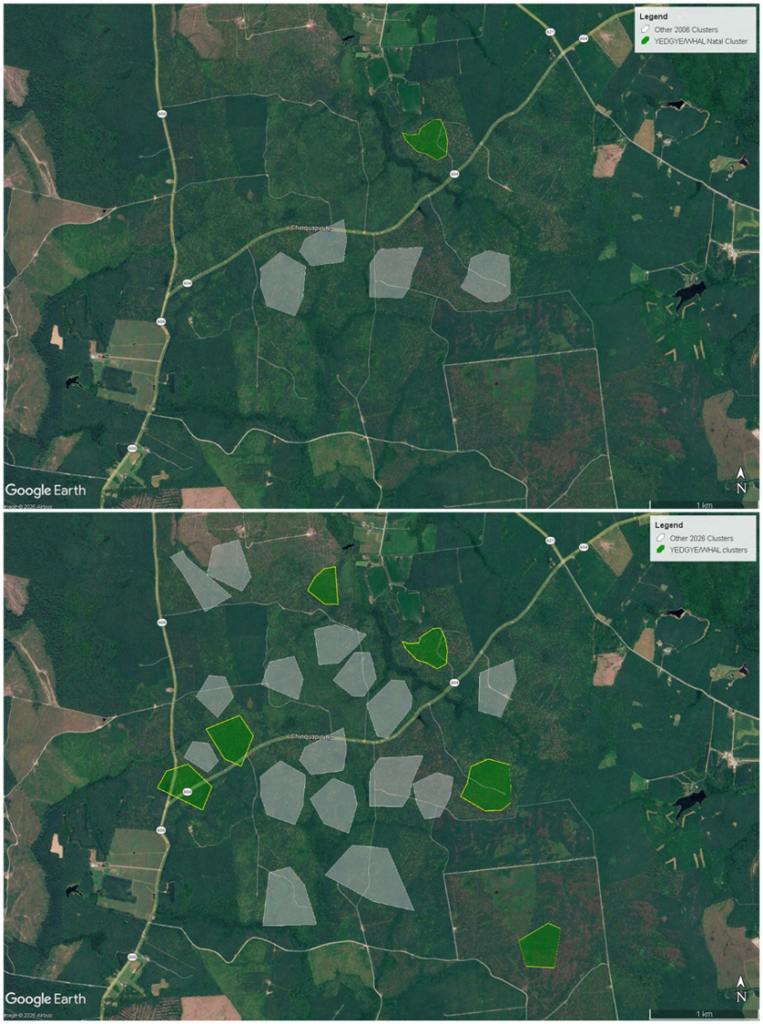
A map of red-cockaded woodpecker groups, or clusters, in 2006 and in 2026. Yellow and green polygons represent YE/DG/YE:WH/AL’s natal cluster in 2006 and clusters where his direct offspring were observed over the past year. Data from CCB.
The morning turned up a couple familiar faces, but the eldest woodpecker was unfortunately not among them. Maybe the icy weather in January did him in, maybe a newly arrived male bested him, or maybe it was just his time. He had a good run, better than any other on record. The old bird will be missed but leaves behind several generations of progeny roaming Piney Grove, having produced 27 offspring that successfully fledged including two that later became his breeding partners.
This bird’s story is about more than an exceptional lifespan; it reflects the success of the conservation effort at Piney Grove. The growth of the population results from an incredible effort by hundreds of land managers, biologists, and volunteers over nearly three decades. With continued effort, the descendants of DG/YE/DG:WH/AL will continue drumming through the pines long after any of us are around to count them.