Playing the Long Game
January 15, 2026
Back to the Glades in Search of Black Rails
January 15, 2026By: Bryan Watts
1/6/26
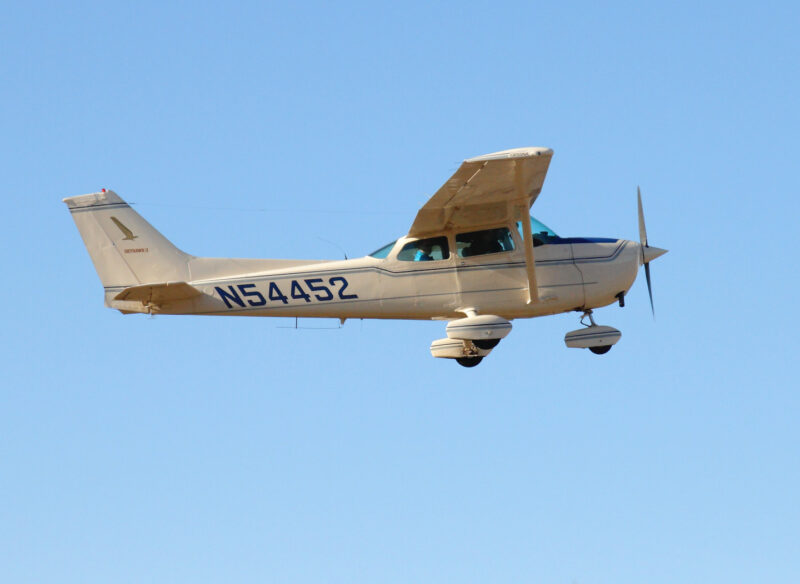
Over the radio, “November 54452 departing 21 Accomack” letting pilots in the area know that we were taking off to the south from Accomack airport. We had spent the morning flying north along the seaside of the Delmarva Peninsula checking eagle nests. Around 11:30 we cut it off near Gargatha Landing and headed over to the airport for lunch and fuel. About halfway through lunch, we realized that the ceiling was dropping fast, and after checking radar Fuzzzo indicated that we had better head home while we still could. By the time we taxied up the runway and announced our departure, the clouds were nearly down to ground level. As we lifted off the runway, we entered a world of white with zero visibility outside the plane. Flying in a small plane with no horizon is completely disorienting. For nearly the entire flight back, Mitchell Byrd was leaning at a forty-five-degree angle feeling like we were banking to the left even though the artificial horizon indicated wings level. This disorientation is what caused John Jr. to crash his piper into the sea off Martha’s Vineyard. After forty-five minutes of white out we descended and emerged from the clouds immediately over the Christopher Wren building on the William & Mary campus. Fuzzzo flew under the clouds directly over campus, made a left turn down college creek and landed at Williamsburg Airport. This is one of dozens of aerial adventures we had with Fuzzzo during three decades and more than 4,000 hours of flying bird surveys.
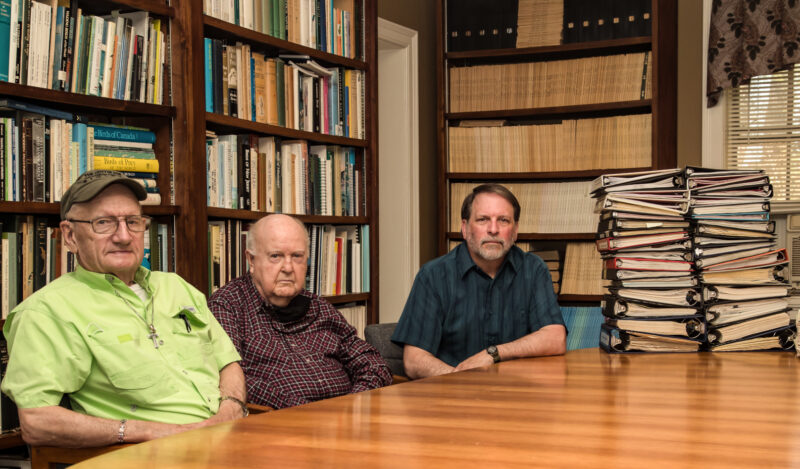
“Fuzzzo” is Caton A. Shermer, or more specifically, retired Airforce and air reserve pilot Lieutenant Colonel Caton Shermer. The name Fuzzzo (middle z is silent) came from a little league baseball coach reflecting his crew cut. The name stuck and was embraced by Shermer. He would later name his company ZZZ Ranch and sign documents with a curved scalp with fuzz sticking up. Fuzzzo started flying in 1962 and joined the Airforce in 1967. He flew F-100s and F-111s in Vietnam and was later stationed in Southeast Asia. After military service, Fuzzzo flew in many capacities including with Delta Airlines and Dominion Aviation, but also as a long-time operator of Hanover Airport where he had a fleet of planes and a flight school. Many local pilots learned from Fuzzzo. Mitchell Byrd and I met up with Fuzzzo in the early 1990s on the recommendation of photographer Tim Wright. For us, it was a fortunate introduction.
For hundreds of days through the decades, every flight day started the same with a 6AM call to Fuzzzo for a condition report to see if the day was flyable. With a question of “how does it look?” you generally got one of several replies including “vis no good today,” “ceiling just too low to operate but if we wait a couple of hours we might be able to get it in,” “winds are a bit high this morning but I don’t think it will hang up the belts” or if the forecast is unclear, “looks like we are going to have to get out and sample the environment to be sure.” After successful surveys in iffy conditions, the typical comment was “looks like we stole one from the weather gods.” Most days ended with him calling Linda to give a position report and a statement that if we were finished he would “head back to Fuzzzoville.”
Of the many pilots we have flown with over the years, none had the smooth touch of Fuzzzo. He always seemed to have the velvet hands (and feet). He was able to feel the wind and work the controls to round off the gusty edges. We have been out on windy days that would turn even the most experienced airmen green and were still able to operate effectively. Fish tailing back and forth toward the runway, Fuzzzo somehow was able to focus and gather the plane under him and lay it down on the runway like we were in the calm surrounded by twisting winds. I have never understood how that works.
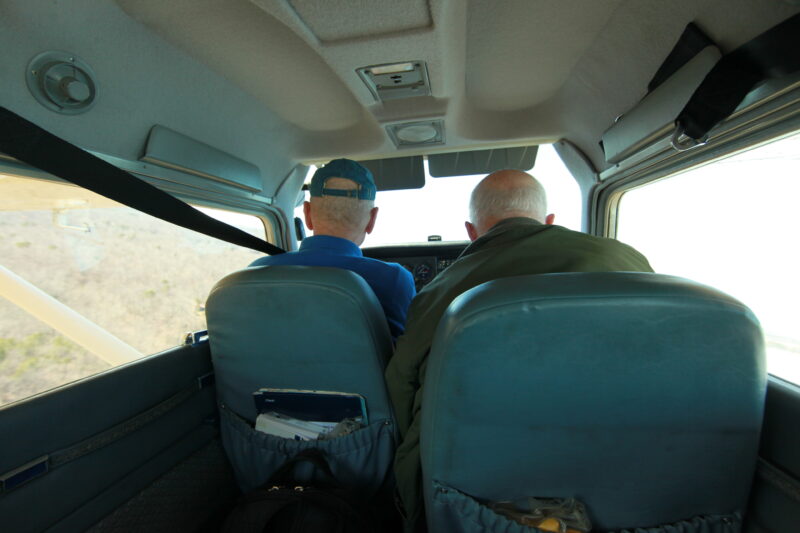
Fuzzzo has always been prepared for the mission. One morning we needed to check some eagle nests on Fort A. P. Hill and the controller gave us a window on Sunday up until 7AM, at which time we had to clear the airspace. I scheduled to meet Fuzzzo at 5AM at his private hanger and when I arrived was surprised to find his wife Linda waiting. I asked her what had her out so early and she explained to me that Airforce pilot’s wives were trained to prepare their men for the mission whatever the time. They were to keep them fed and take care of other necessities so that the pilots could completely focus on the mission at hand. A force of nature, I have no doubt that Linda fulfilled that charge for over 50 years.
One could get a sense that Fuzzzo was an international man of mystery from his business card that had his contact information and a simple statement – Fuzzzo. Oracle, Soothsayer. One of a kind, Fuzzzo is a seeker and person full of adventure. One Monday morning we asked Fuzzzo how his weekend had gone and he replied, “I bagged an 8-point on Saturday.” He had flown a heart and its associated surgeon to Winchester in a king air after midnight and as they approached a buck appeared on the runway that could not be avoided. The plane killed the deer and damaged the landing gear but both heart and surgeon made it to the hospital on time. Fuzzzo is a fountain of classic lines. One morning we were flying eagle surveys in Gloucester County and found a new nest in a vast stand of regenerating pines. With no landmarks available to map the nest, we circled for several minutes and flew over to Route 17 to find a known position. Asking what the building was down there Fuzzzo replied, “Don’t know the brand but looks like one of those stop-and-robs.”
I did not know that Fuzzzo was a poet and songwriter until one day we were eating lunch at Humel Airport and a pilot came in and said that he really enjoyed Fuzzzo’s song played at one of the state’s aviation meetings. Years later, along with the group “The Never Was Beens,” Fuzzzo would produce the CD “MacArthur Avenue” featuring 10 original songs, including “The Road to Might Have Been,” “Biker Bill,” “Hello My Friends” and others. The group toured local venues performing the set for a short period.
I have flown with dozens of pilots in remote places throughout the Western Hemisphere and many is the time I wished that Fuzzzo was at the controls. We have seen so many spectacular things from the air, ridden the wind in all conditions, flown among the puffy clouds and eaten lunch in every little airport with a runway in the region. It has been a great ride. Fuzzzo retired after 60 years of flying and 30 years of bird surveys.
Blue skies – Fuzzzo